Investigate repeated idle patterns with the people doing the work. Not every stationary engine is unnecessary waste.
A stationary vehicle can still be working
An engine running at a loading bay can look like a straightforward saving opportunity. In practice, equipment, safety procedures, vehicle systems or site restrictions may explain part of that time. Start with a question about the work before labelling the driver’s behaviour.
Choose a repeat pattern: the same depot, the same shift, or the same point in a route. Review journey timing, location and reported idle time together. Compare the pattern with what the driver and site team describe.
Set a baseline your team can recognise
Use a consistent period and record the number of active vehicles, their duty and total idle time. If work changes substantially, note it. Total fleet idle time can rise simply because the business ran more vehicles or completed more jobs.
Look at time per vehicle or per comparable shift as well as the fleet total. Take care with devices that have stopped reporting and periods where the ignition signal is not available. A clean chart is useful only when the underlying coverage is understood.
Change the process as well as the habit
If queues at a site repeatedly create waiting, discuss arrival windows or loading arrangements. If the issue is a routine that no longer serves a purpose, agree an appropriate shutdown practice with the team, taking account of vehicle and equipment instructions.
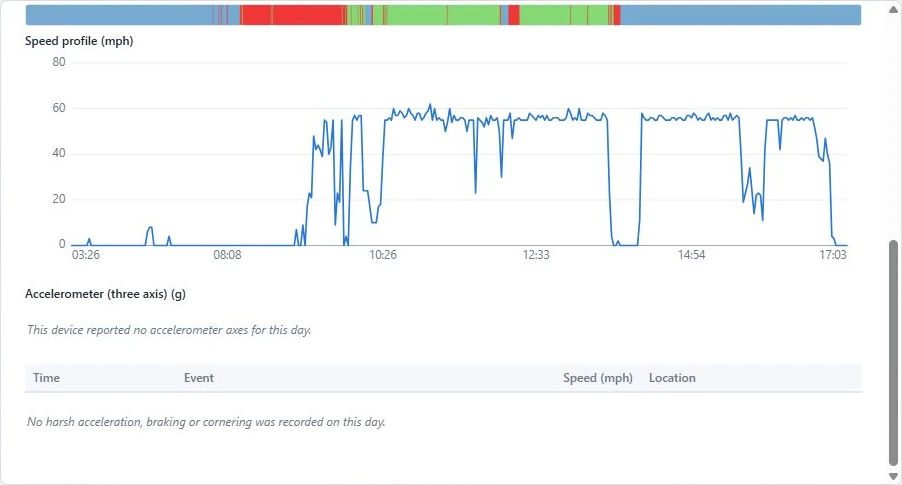
Review the next comparable period and ask whether the change helped. GTrak’s efficiency tools and journey reports provide a way to revisit the pattern, with supported idle, speeding, acceleration, braking and cornering information. Keep the conversation focused on improvement.
- Choose one recurring location or shift to investigate.
- Check equipment needs and site procedures.
- Agree an action with a named owner.
- Compare similar work before and after the change.
From explanation to a working example
See it for your fleet.
Talk to GTrak about your vehicles, available data and the tools your team needs.