Start with a reliable baseline. Compare similar vehicles doing similar work, then investigate the exceptions before setting targets.
Start with the numbers you can trust
A rising fuel bill does not explain what has changed. More miles, heavier loads, different routes and a busier month can all affect spend. Start by separating total purchases from the fuel used on the work you are reviewing. Receipts, tank readings and reported consumption describe different parts of the picture.
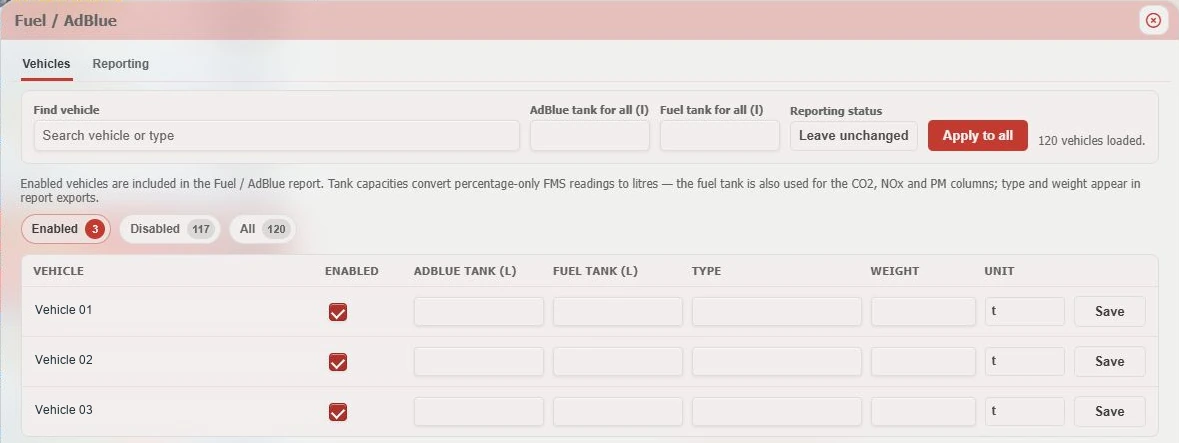
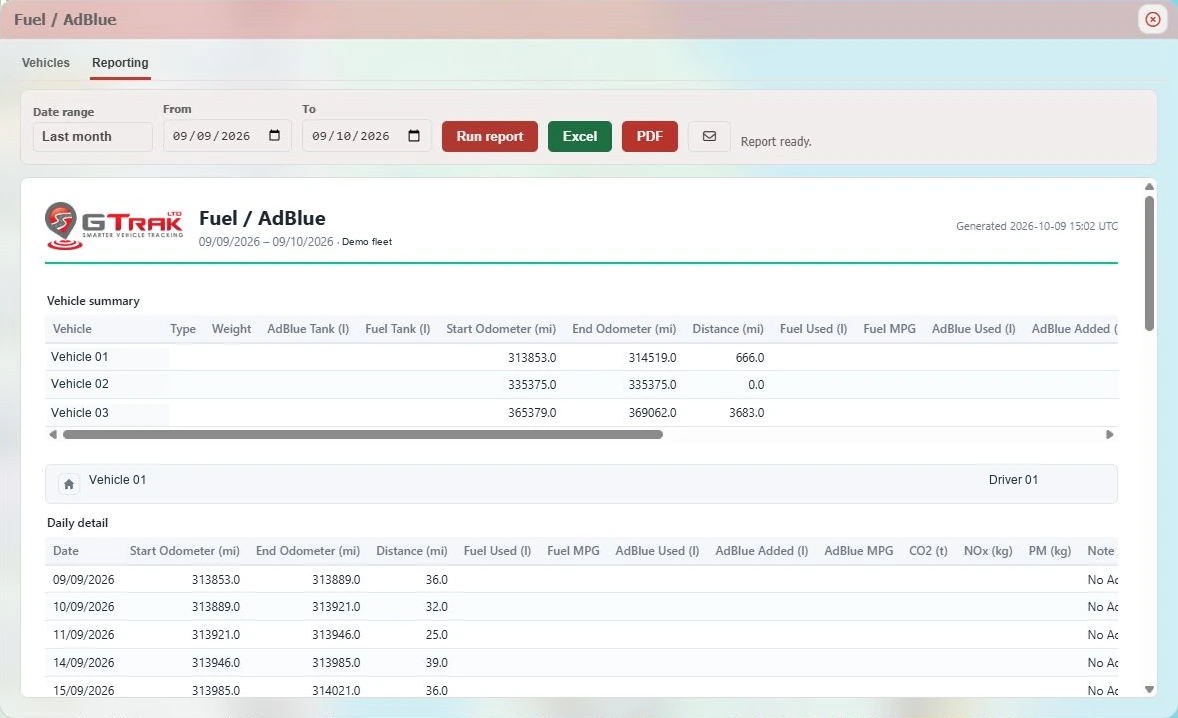
Choose a reporting period and collect distance, fuel usage where supported, engine or idle time and the vehicle’s job type. Record missing data rather than treating a blank as zero. In GTrak, compatible CAN/FMS readings can support fuel and mileage reporting, with available Excel and PDF exports.
Compare a vehicle with the right peers
A delivery van in town and a tractor unit on a motorway do different work. Group vehicles by type, route, load and duty before comparing efficiency. A vehicle’s own trend may be more useful than a fleet league table when its workload changes frequently.
Use consistent units. UK MPG uses the imperial gallon; litres per 100 km expresses consumption differently. Keep the same unit and time window across the report, and note workshop visits or unusual jobs that could skew the result.
Turn one finding into one action
Pick a repeated issue, such as long idle periods at one depot, and review the journey context with the team. Agree a realistic change, assign an owner and compare the next period under similar conditions. A useful review explains why performance changed rather than just reporting that it changed.
- Check data coverage and the reporting period.
- Group comparable vehicles and identify repeated exceptions.
- Discuss route, load, waiting time and equipment needs with drivers.
- Track the change against the original baseline.
What GTrak adds
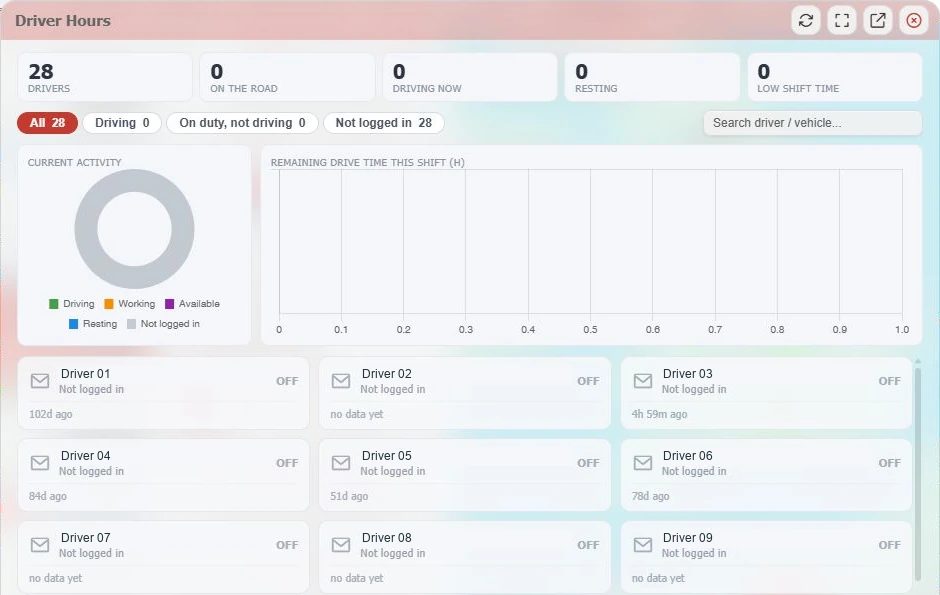
GTrak brings tracking, journey history, idling and driver-performance tools alongside supported vehicle readings. We check your makes, models, years and installed devices to establish which signals can be reported. Savings depend on your starting point and the changes you make; there is no universal percentage to promise.
From explanation to a working example
See it for your fleet.
Talk to GTrak about your vehicles, available data and the tools your team needs.